Most people think making a good ad is about having a good editor.
It isn't.
You can have the best animation in the world, but if you don't understand the product, you're probably just making something that looks cool. We learned this pretty quickly while working with Advanc. Their product is all about encryption.
And honestly, that's not the easiest thing to make interesting.
Encryption is supposed to be invisible. You don't open your laptop and think about encryption. You just expect everything to work.
So our job wasn't really to "make an encryption video." Our job was to make something invisible feel real. And we had about 20 to 35 seconds to do it.
It starts before the timeline
Before opening After Effects, we got on a call with the founder. We wanted to understand everything.
- What are you building?
- Why does it exist?
- What does it replace?
- Who actually needs it?
- And most importantly, what do you want someone to understand after watching the video?
This conversation matters way more than people think.
Because sometimes the initial idea isn't clear enough. And that's where we push back.
It's much easier to fix an idea on a call than after spending 30 hours animating it.
Then we do the research
Once we understand the product, we go looking for everything around it.
- Competitors
- Existing ads
- Messaging
- Audience
- The way people already talk about the problem
For Advanc, this was especially important.
We were talking about encryption to people who probably didn't want to hear about encryption in the first place.
So we had to find a way to communicate the value without turning the video into a technical lecture.
We also looked at what everyone else in the category was doing. Then tried to stay away from it. Because if everyone is explaining the same thing in the same way, making another version of it isn't going to help much.
The creative comes together
Once we have enough information, we start building the creative.
And there are three things we care about here.
The script.
What are we saying, and what needs to hit in the first few seconds?
The moodboard.
What should this actually feel like? Not just references we think look cool, but a visual direction that everyone can agree on before production starts.
The sound.
Music and voiceover have a huge impact on pacing. Sometimes you can feel whether a video is going to work before the animation is even finished.
Once those pieces are locked, we finally open the timeline.
Then we animate
This is obviously the biggest part of the production. But here's the interesting thing.
By this point, most of the difficult decisions are already done.
We know what we're saying. We know what we're showing. We know what the video should feel like. Now we're just turning the idea into something people can actually watch. And every animation has one job.
Make the product easier to understand. Not add animation for the sake of animation.
But the first video wasn't supposed to become 13
The first thing we made for Advanc was actually pretty small.
A 20 to 35 second video that the founder could put into a deck and use to explain the vision quickly. Then things got interesting.
That one piece turned into a full campaign.
We ended up producing 13 video ads for YouTube, each covering a different product angle, message, and part of the launch. We can't show the full campaign because of an NDA.
But we can talk about what happened.
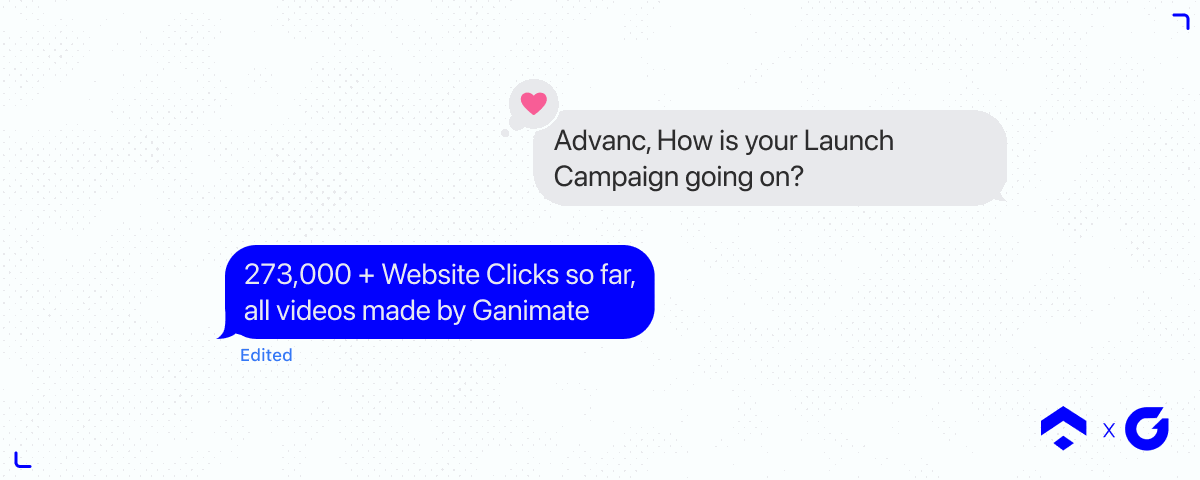
273,000+website clicks
And that's what I find more interesting than the view count. Because this wasn't one video randomly blowing up.
It was 13 different creatives working together.
Different angles. Different messages. Different reasons for someone to care. All pointing toward the same product.
The entire campaign was built around one simple challenge:
How do you make something invisible feel concrete?
That's what we tried to solve with every video.
From a campaign to a system
After the first campaign, we didn't want to start from zero every time Advanc had something new to launch.
So we built a process around it.
Now the founder can drop a rough idea into our shared Slack. Sometimes it's literally just one line about what's shipping.
We turn that into the script and shot direction. The first cut comes back within a few days.
One round of revisions.
Then it ships.
The biggest advantage is that we don't need to relearn the brand every time. We already understand the audience. We already understand the product. We already understand the visual language.
So every new video gets faster without becoming worse. And I think that's the real value of working together long term.
You're not just making videos anymore. You're building a creative system.